
End-to-End Video Production: From First Brief to Final Cut
Master end to end video production from the first brief to the final cut. Discover how to align your team, protect creative vision, and streamline delivery.
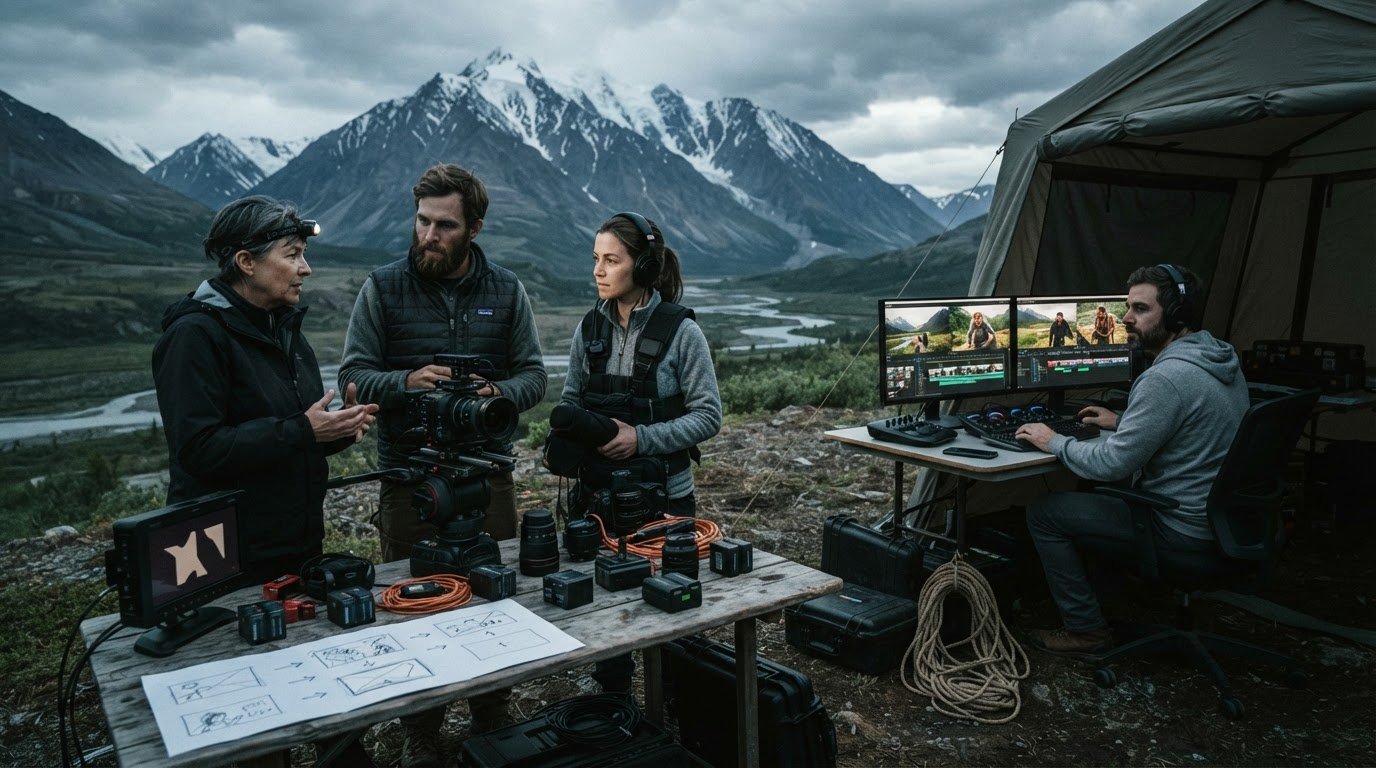
A strong concept can lose its force in the handoffs. The brief sets one direction, the shoot captures another, and post-production is left to rebuild the story. End to end video production keeps those stages connected, from the first creative decisions to the final cut.
Teams need to know what to bring into the brief, what to settle before cameras roll, and how to give feedback in post without pulling the work off course. Clear ownership and practical coordination matter as much as the images on screen.
This guide follows the production pipeline, showing what happens at each stage and which decisions help keep a project moving. We’ll cover planning, filming, editing, review, and delivery, with a focus on protecting the original idea through every handoff. The right production mix depends on the goal, whether the project calls for commercial filming, live streaming, or a distinctive camera bicycle perspective. 313 Media Group connects video production and post-production, drawing on more than 20 years of production experience to support the path from brief to finished video.
Key Takeaways
- End to end video production connects creative development, filming, post-production, and delivery so the original idea carries through each stage.
- Each stage builds on earlier decisions and passes specific materials and direction to the next.
- A focused brief aligns objectives, audience, message, brand assets, decision-makers, and review steps before production begins.
- An integrated workflow can preserve continuity while adapting the production approach to the project.
- 313 Media Group brings video production, live streaming, and post-production together around project goals.
End-to-End Video Production: From Brief to Delivery
End-to-end video production connects a project’s initial objective with creative planning, filming, post-production, and delivery of finished video assets.
The value is continuity. Each phase should carry forward the purpose set in the brief, rather than leaving the next team to guess what the work needs to achieve. The Video production process is commonly grouped into pre-production, production, and post-production. Creative development and final delivery frame those stages, giving the project a clear path from intent to usable files.
What belongs inside the production process?
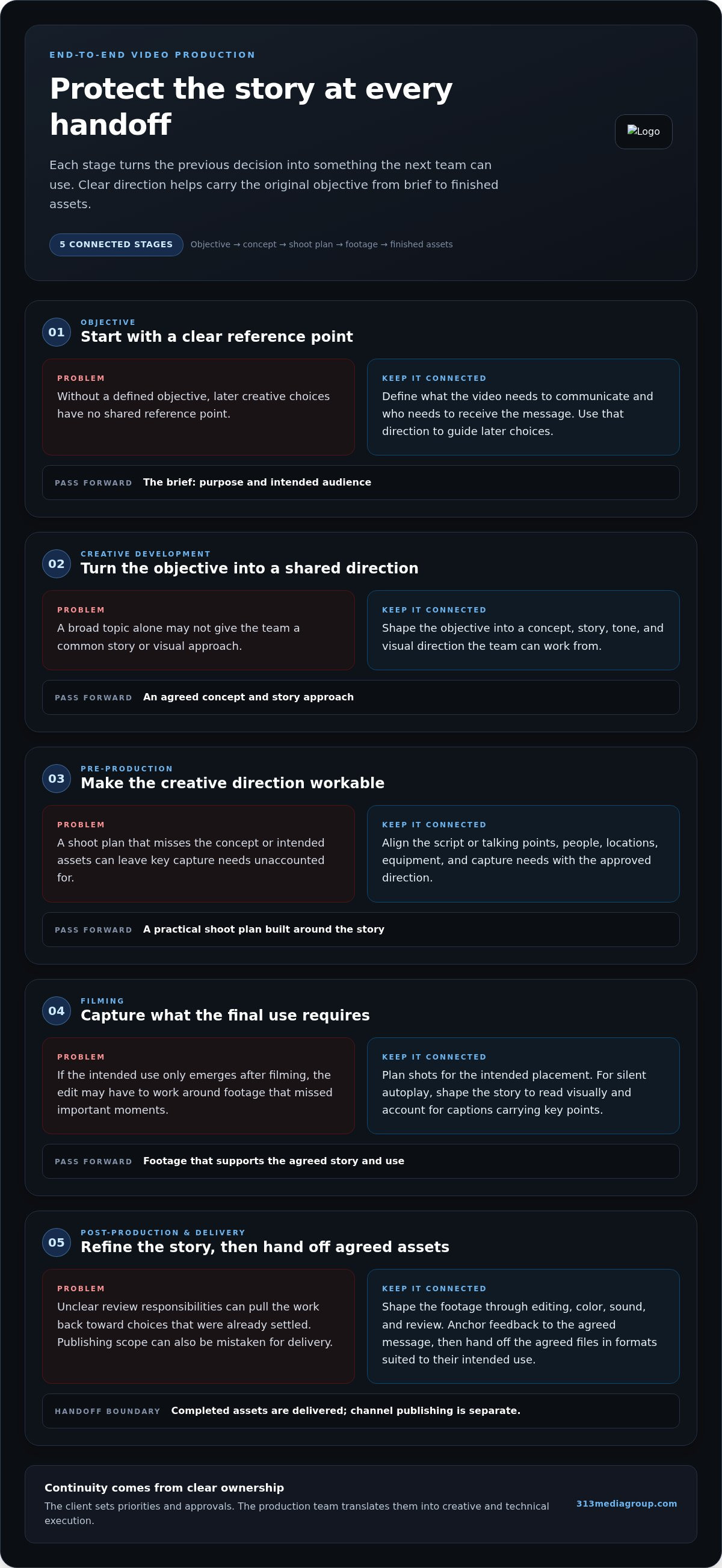
The brief establishes the purpose and intended audience. Creative development turns that direction into a story approach. Pre-production makes the approach workable by aligning the team on the script or talking points, shoot requirements, locations, participants, and assets. Filming captures the material. Editing shapes it into a finished piece, with sound, color, graphics, and review handled according to the project’s needs.
Each phase should pass a useful output forward. The brief guides creative direction; preparation translates that direction into a shoot plan; filming supplies the footage; and post-production assembles and refines the story. Final delivery provides the agreed assets in formats suited to their intended use. A campaign might need a main video and shorter edits, while a live stream has a different production and delivery structure.
Define the handoff and deliverables early. Production delivery covers the completed assets and agreed file handoff, while ongoing channel publishing is a separate activity. A brand can publish the files through its own channels or coordinate publishing separately. Clarifying the boundary helps the production team focus on making the video and gives everyone a shared understanding of what the project includes.
Why does continuity matter from the first brief?
The original objective informs every creative and practical choice: what the story emphasizes, what the camera needs to capture, and how the final asset should be shaped. Clear decision ownership helps preserve that thread. The client sets priorities and provides approvals; the production team translates those decisions into creative and technical execution. When responsibilities and review points are clear, feedback can improve the work without reopening settled choices.
Consider a product film intended for a silent, autoplay placement. That use case calls for a story that reads visually and captions that carry key points. The team can account for both while shaping the concept, plan shots around visible actions, and include captions in post-production. If the intended use only comes up after filming, the edit may have to work around footage that never captured those moments.
That is the practical value of end to end video production: the brief does more than start the project. It remains a working reference that links creative intent to decisions on set and in the edit, right through to the final handoff.
How the video production workflow moves from idea to finished assets
The workflow moves from objective and brief to creative development, pre-production, filming, post-production, and final delivery. In end to end video production, each stage passes decisions and materials the next stage needs. The concept sets direction for preparation; preparation guides what the crew captures; and the footage informs the edit. A gap in one handoff can affect later work, so each stage needs a clear purpose and a useful output.
How do creative development and pre-production set direction?
Creative development turns the project’s objective into a concept and story approach. The team aligns on audience, core message, and visual direction, then tests those choices against the intended format and production requirements. Pre-production translates that direction into a workable plan. The practical check is whether each choice, from participants to equipment and capture needs, supports the creative aim and the intended assets.
- Set the objective. Define what the video needs to communicate and who needs to receive that message. Use this as the reference point for later creative choices.
- Develop the concept. Shape the objective into a story, tone, and visual approach. The result should give the team a shared creative direction, not just a broad topic.
- Prepare the production. Turn the approved direction into decisions about people, locations, equipment, and capture needs. Check that the plan reflects both the concept and the asset’s intended use.
- Film the planned material. Capture the scenes, interviews, or live action the story requires. On-set execution follows the plan while responding to real conditions, with changes guided by the project’s priorities.
- Build and deliver the finished assets. Post-production shapes the recorded material through editing, color grading, and sound design. The final handoff provides the agreed video files; publishing them to a channel is a separate step.
What happens from filming through final delivery?
Filming creates the raw material, but the concept determines what counts as a useful capture. If the story depends on a clear demonstration, the crew needs to capture the action from a perspective that makes it easy to understand. Post-production assembles the strongest material into a coherent piece, refining pace, image, and sound. Keep review feedback anchored to the agreed message so revisions strengthen the story rather than redirecting it without purpose.
Delivery closes the production work with assets shaped for their intended use. A finished video file is not the same as a published post: channel selection, accompanying copy, and publishing activity sit beyond the file handoff unless the project scope includes them. Defining that boundary keeps responsibilities clear and helps the team focus on the right deliverable.
For projects that need coordinated filming and editing, video production and post-production can connect capture decisions with the final cut.
Does end-to-end video production simplify the process, or limit flexibility?
A connected workflow can make coordination clearer, but it should not lock a project into one crew, method, or production formula. End-to-end describes how stages and decisions connect, not a requirement to use the same people or capabilities at every step. The right structure depends on the goal, the work required, and who owns each decision.
The main trade-off is how handoffs are managed. Separate teams can bring focused expertise, but each transition needs a clear transfer of context. An integrated workflow keeps the objective, creative direction, and production requirements visible as work moves forward. Neither structure removes the need for client input, review, or adaptation.
| Consideration | Connected coordination | Separate handoffs |
|---|---|---|
| Continuity | Shared project direction can travel across stages. | Each team needs the relevant context at the transition. |
| Accountability | Roles and approval points can be mapped across the workflow. | Responsibilities need clear definition between contributors. |
| Flexibility | Specialists and scope can shift with project needs. | Individual stages can be arranged independently. |
| Scope | Capabilities are coordinated around the intended outcome. | Each stage can be commissioned as a distinct piece of work. |
Where does a connected workflow reduce handoff friction?
Friction often appears when a requirement gets lost between planning, filming, and post-production. Shared creative direction gives each contributor a reference point, while clear decision ownership shows who sets priorities, who executes, and who approves changes. For example, if a video needs to work in both a wide presentation format and a vertical social format, that requirement can shape framing on set and editing choices later. It will not prevent every revision or unexpected production challenge, but it gives the team a basis for responding without losing sight of the goal.
When should production scope stay modular?
Not every project needs every capability. A focused interview may call for filming and post-production; a live event may need live streaming; a campaign may require a broader mix of video assets. Match the production plan to the intended output instead of adding services simply because they are available. Modular scope also leaves room to bring in specific expertise where the project calls for it, while keeping responsibilities and deliverables clear.
For 313 Media Group, end to end video production means connecting the relevant work around the project’s goals. The team provides commercial filming, multi-camera live streaming, and post-production, with the production mix shaped to the brief. Clients remain involved in shaping direction and reviewing work; coordination supports that control rather than replacing it.
How to prepare a video production brief that keeps the work on track
A useful brief gives end to end video production a clear target before creative and practical choices gather speed. It does not need polished language or a locked script. It needs enough direction for the team to understand what the video must do, who it must reach, and which decisions are fixed. Label open creative choices as options, not hidden requirements.
A strong video production brief names the objective, audience, core message, tone, intended channels, required deliverables, decision-makers, available brand assets, fixed requirements, and review process.
What should the brief establish before production?
Start with the communication goal and the audience. Describe what the video should help the audience understand or do, then state the main message in plain language. Add the intended channels and deliverables so creative choices reflect how the finished assets will be used. Name the people who can approve the work and identify who gathers feedback. Clear decision authority helps prevent conflicting notes from turning into competing directions.
- Objective and audience: Explain what the video needs to communicate and who it is for. A broad goal such as “raise awareness” needs more context to guide a story.
- Message and tone: State the central point and the intended feel, such as direct, warm, or energetic. Separate essential facts from supporting details.
- Use and deliverables: Identify intended channels and the assets needed for them, such as a main video and shorter edits. Keep channel publishing separate from production deliverables.
- Brand materials: Gather relevant logos, visual guidelines, existing footage, scripts, or reference videos. Note what the team should use and what is for inspiration only.
- Requirements and options: Label non-negotiable elements, such as required wording or a specific format, separately from creative preferences that can evolve.
- Approvals and review: Name decision-makers, who consolidates comments, and how review rounds will work. This gives the team a clear route for resolving feedback.
How can clients keep feedback clear and useful?
Anchor notes to the agreed objective. “The opening should establish the product sooner” gives the editor a specific message-level direction. “The music feels wrong” is harder to act on; explain whether the issue is pace, mood, or how the sound competes with speech. Visual feedback can point to a specific shot or moment, while pacing notes can identify where the story feels slow or rushed.
Consolidate feedback before sending it, and distinguish required corrections from preferences. If reviewers disagree, the named decision-maker can weigh the options against the brief instead of asking the production team to reconcile conflicting opinions. Detailed channel strategy can sit in separate planning; the brief still needs to identify intended use so the assets are shaped for it.
Bring a clear brief and a focused review path to your next project. Plan your video production project with 313 Media Group.
How 313 Media Group connects creative direction with production execution
A production plan works best when it fits the project. A commercial film, a live event, and a campaign built for digital channels each call for different choices on set and in post. 313 Media Group brings video production, live streaming, and post-production into the planning around those needs. The aim is a practical production mix that carries creative direction into execution without adding steps that do not serve the outcome.
What capabilities can shape the right production mix?
Commercial filming turns a concept into captured material, with on-set technical decisions guided by the story and intended use. A live broadcast has a different rhythm and operating needs. Multi-camera live streaming can capture an event or broadcast from multiple angles, while post-production shapes recorded footage into finished assets. Each capability serves a distinct role; the project’s goal determines which belong in the plan.
- Commercial filming: Captures branded and digital content, with production choices aligned to the creative direction and intended assets.
- Live streaming: Supports broadcasts and events through multi-camera production, where multiple views can serve the live program.
- Post-production: Shapes footage after filming, refining the material into finished video assets.
- Camera bicycle cinematography: Adds a specialized moving-camera perspective when the visual approach calls for it.
- Professional gear rental: Supplies production equipment for projects where rental fits the production plan.
These capabilities do not need to be bundled into every project. A focused film may center on filming and post-production. An event may need live streaming. A campaign may connect video assets with social media strategy, aligning content with platform-specific campaign goals.
How does the team carry the project from concept into execution?
Continuity starts with the objective. Creative direction informs the production approach, and intended use shapes what the team captures and how the assets take form in post. Keeping those choices connected helps the work stay anchored to the project’s purpose as it moves from planning to execution. The production mix can draw on the relevant capabilities without treating every project as the same assignment.
313 Media Group cites more than 20 years of production experience. Its capabilities span commercial filming, multi-camera live streaming, and post-production, alongside specialized camera bicycle cinematography, professional gear rental, and social media strategy. This range lets projects match the production approach to the work, whether the priority is a polished commercial, a live event, or finished video assets for a campaign.
For a project that needs connected creative and production support, explore 313 Media Group’s video production services.
Turn Your Next Video Idea Into a Clear Brief
Give the next project one clear starting point: the change you want the video to create for its audience. Let that objective guide the creative ambition, production choices, and finished asset. That is the practical value of end to end video production. It keeps the work moving toward a defined purpose while leaving room for creative decisions to sharpen the story.
Before production begins, align your team on the priority message and who has the final say. Then build from there. A focused direction gives collaborators something solid to act on and helps keep the finished work true to the reason you started.
Ready to shape your next project? Explore 313 Media Group’s video production services and find a production approach that fits your goals. Bring the idea, set the direction, and make the next cut count.
Frequently Asked Questions
Can an end-to-end video project use a script the client already has?
Yes. An existing script can give the project a strong starting point, but it still needs to fit the objective, audience, format, and production requirements. For example, a script written for a live presentation may need adjustments before it works as a short digital video. The team can keep it intact or develop specific sections. Agree on the working version and who can approve changes before filming.
What happens if the project goals change after filming begins?
A change in goals can affect the story, planned footage, edit, and final deliverables. Document what changed, then identify which approved decisions and completed work it affects. For example, a shift from a detailed product demonstration to a brand story may call for different scenes or a new edit direction. Agree on revised scope before proceeding. Early communication helps surface the impact, but it cannot undo work already completed.
How much creative control does a client retain during editing?
Creative control follows the review and approval process agreed for the project. Set it up before filming: name the people who can make decisions, choose who consolidates notes, and identify who approves the final cut. During review, tie comments to clear elements, such as a factual correction, a moment that needs more emphasis, or a section that feels too long. This keeps collaboration focused and decisions actionable.
Are music and stock footage rights automatically included in a finished video?
No. Third-party music, stock footage, and other materials can carry specific usage permissions, so do not assume a finished edit includes unrestricted rights. The project scope and licensing terms should identify which assets are cleared, where the video can appear, and any limits on use. Keep the relevant records with the project files. That makes future edits or reuse easier to assess without relying on memory.
Can a client receive raw footage as well as finished videos?
Yes, if the project scope includes raw footage as a deliverable. Set out whether source media will be supplied, how it will be organized, and the technical format for handoff. For example, footage grouped by shoot day or scene can be easier to navigate later. Raw files are not the same as edited videos; they may need additional storage and editorial work before they are ready for another use.
Is end-to-end video production only suitable for large campaigns?
No. The approach can suit a single video just as well as a larger campaign. A short interview, for instance, still benefits from a defined purpose, suitable preparation, filming, editing, and delivery. Keep the plan proportional to the intended use. If one finished video meets the goal, there is no need to add extra assets or production stages that do not serve that outcome.
Frequently asked questions
What belongs inside the production process?
The brief establishes the purpose and intended audience. Creative development turns that direction into a story approach. Pre-production makes the approach workable by aligning the team on the script or talking points, shoot requirements, locations, participants, and assets. Filming captures the material. Editing shapes it into a finished piece, with sound, color, graphics, and review handled according to the project’s needs. Each phase should pass a useful output forward. The brief guides creative direction; preparation translates that direction into a shoot plan; filming supplies the footage; and post-production assembles and refines the story. Final delivery provides the agreed assets in formats suited to their intended use. A campaign might need a main video and shorter edits, while a live stream has a different production and delivery structure. Define the handoff and deliverables early. Production delivery covers the completed assets and agreed file handoff, while ongoing channel publishing is a separate activity. A brand can publish the files through its own channels or coordinate publishing separately. Clarifying the boundary helps the production team focus on making the video and gives everyone a shared understanding of what the project includes.
Why does continuity matter from the first brief?
The original objective informs every creative and practical choice: what the story emphasizes, what the camera needs to capture, and how the final asset should be shaped. Clear decision ownership helps preserve that thread. The client sets priorities and provides approvals; the production team translates those decisions into creative and technical execution. When responsibilities and review points are clear, feedback can improve the work without reopening settled choices. Consider a product film intended for a silent, autoplay placement. That use case calls for a story that reads visually and captions that carry key points. The team can account for both while shaping the concept, plan shots around visible actions, and include captions in post-production. If the intended use only comes up after filming, the edit may have to work around footage that never captured those moments. That is the practical value of end to end video production: the brief does more than start the project. It remains a working reference that links creative intent to decisions on set and in the edit, right through to the final handoff. The workflow moves from objective and brief to creative development, pre-production, filming, post-production, and final delivery. In end to end video production, each stage passes decisions and materials the next stage needs. The concept sets direction for preparation; preparation guides what the crew captures; and the footage informs the edit. A gap in one handoff can affect later work, so each stage needs a clear purpose and a useful output.
How do creative development and pre-production set direction?
Creative development turns the project’s objective into a concept and story approach. The team aligns on audience, core message, and visual direction, then tests those choices against the intended format and production requirements. Pre-production translates that direction into a workable plan. The practical check is whether each choice, from participants to equipment and capture needs, supports the creative aim and the intended assets.
What happens from filming through final delivery?
Filming creates the raw material, but the concept determines what counts as a useful capture. If the story depends on a clear demonstration, the crew needs to capture the action from a perspective that makes it easy to understand. Post-production assembles the strongest material into a coherent piece, refining pace, image, and sound. Keep review feedback anchored to the agreed message so revisions strengthen the story rather than redirecting it without purpose. Delivery closes the production work with assets shaped for their intended use. A finished video file is not the same as a published post: channel selection, accompanying copy, and publishing activity sit beyond the file handoff unless the project scope includes them. Defining that boundary keeps responsibilities clear and helps the team focus on the right deliverable. For projects that need coordinated filming and editing, video production and post-production can connect capture decisions with the final cut. A connected workflow can make coordination clearer, but it should not lock a project into one crew, method, or production formula. End-to-end describes how stages and decisions connect, not a requirement to use the same people or capabilities at every step. The right structure depends on the goal, the work required, and who owns each decision. The main trade-off is how handoffs are managed. Separate teams can bring focused expertise, but each transition needs a clear transfer of context. An integrated workflow keeps the objective, creative direction, and production requirements visible as work moves forward. Neither structure removes the need for client input, review, or adaptation.
Where does a connected workflow reduce handoff friction?
Friction often appears when a requirement gets lost between planning, filming, and post-production. Shared creative direction gives each contributor a reference point, while clear decision ownership shows who sets priorities, who executes, and who approves changes. For example, if a video needs to work in both a wide presentation format and a vertical social format, that requirement can shape framing on set and editing choices later. It will not prevent every revision or unexpected production challenge, but it gives the team a basis for responding without losing sight of the goal.
When should production scope stay modular?
Not every project needs every capability. A focused interview may call for filming and post-production; a live event may need live streaming; a campaign may require a broader mix of video assets. Match the production plan to the intended output instead of adding services simply because they are available. Modular scope also leaves room to bring in specific expertise where the project calls for it, while keeping responsibilities and deliverables clear. For 313 Media Group, end to end video production means connecting the relevant work around the project’s goals. The team provides commercial filming, multi-camera live streaming, and post-production, with the production mix shaped to the brief. Clients remain involved in shaping direction and reviewing work; coordination supports that control rather than replacing it. A useful brief gives end to end video production a clear target before creative and practical choices gather speed. It does not need polished language or a locked script. It needs enough direction for the team to understand what the video must do, who it must reach, and which decisions are fixed. Label open creative choices as options, not hidden requirements. A strong video production brief names the objective, audience, core message, tone, intended channels, required deliverables, decision-makers, available brand assets, fixed requirements, and review process.
What should the brief establish before production?
Start with the communication goal and the audience. Describe what the video should help the audience understand or do, then state the main message in plain language. Add the intended channels and deliverables so creative choices reflect how the finished assets will be used. Name the people who can approve the work and identify who gathers feedback. Clear decision authority helps prevent conflicting notes from turning into competing directions.
How can clients keep feedback clear and useful?
Anchor notes to the agreed objective. “The opening should establish the product sooner” gives the editor a specific message-level direction. “The music feels wrong” is harder to act on; explain whether the issue is pace, mood, or how the sound competes with speech. Visual feedback can point to a specific shot or moment, while pacing notes can identify where the story feels slow or rushed. Consolidate feedback before sending it, and distinguish required corrections from preferences. If reviewers disagree, the named decision-maker can weigh the options against the brief instead of asking the production team to reconcile conflicting opinions. Detailed channel strategy can sit in separate planning; the brief still needs to identify intended use so the assets are shaped for it. Bring a clear brief and a focused review path to your next project. Plan your video production project with 313 Media Group. A production plan works best when it fits the project. A commercial film, a live event, and a campaign built for digital channels each call for different choices on set and in post. 313 Media Group brings video production, live streaming, and post-production into the planning around those needs. The aim is a practical production mix that carries creative direction into execution without adding steps that do not serve the outcome.
What capabilities can shape the right production mix?
Commercial filming turns a concept into captured material, with on-set technical decisions guided by the story and intended use. A live broadcast has a different rhythm and operating needs. Multi-camera live streaming can capture an event or broadcast from multiple angles, while post-production shapes recorded footage into finished assets. Each capability serves a distinct role; the project’s goal determines which belong in the plan. These capabilities do not need to be bundled into every project. A focused film may center on filming and post-production. An event may need live streaming. A campaign may connect video assets with social media strategy, aligning content with platform-specific campaign goals.
How does the team carry the project from concept into execution?
Continuity starts with the objective. Creative direction informs the production approach, and intended use shapes what the team captures and how the assets take form in post. Keeping those choices connected helps the work stay anchored to the project’s purpose as it moves from planning to execution. The production mix can draw on the relevant capabilities without treating every project as the same assignment. 313 Media Group cites more than 20 years of production experience. Its capabilities span commercial filming, multi-camera live streaming, and post-production, alongside specialized camera bicycle cinematography, professional gear rental, and social media strategy. This range lets projects match the production approach to the work, whether the priority is a polished commercial, a live event, or finished video assets for a campaign. For a project that needs connected creative and production support, explore 313 Media Group’s video production services. Give the next project one clear starting point: the change you want the video to create for its audience. Let that objective guide the creative ambition, production choices, and finished asset. That is the practical value of end to end video production. It keeps the work moving toward a defined purpose while leaving room for creative decisions to sharpen the story. Before production begins, align your team on the priority message and who has the final say. Then build from there. A focused direction gives collaborators something solid to act on and helps keep the finished work true to the reason you started. Ready to shape your next project? Explore 313 Media Group’s video production services and find a production approach that fits your goals. Bring the idea, set the direction, and make the next cut count.
Can an end-to-end video project use a script the client already has?
Yes. An existing script can give the project a strong starting point, but it still needs to fit the objective, audience, format, and production requirements. For example, a script written for a live presentation may need adjustments before it works as a short digital video. The team can keep it intact or develop specific sections. Agree on the working version and who can approve changes before filming.
What happens if the project goals change after filming begins?
A change in goals can affect the story, planned footage, edit, and final deliverables. Document what changed, then identify which approved decisions and completed work it affects. For example, a shift from a detailed product demonstration to a brand story may call for different scenes or a new edit direction. Agree on revised scope before proceeding. Early communication helps surface the impact, but it cannot undo work already completed.
How much creative control does a client retain during editing?
Creative control follows the review and approval process agreed for the project. Set it up before filming: name the people who can make decisions, choose who consolidates notes, and identify who approves the final cut. During review, tie comments to clear elements, such as a factual correction, a moment that needs more emphasis, or a section that feels too long. This keeps collaboration focused and decisions actionable.
Are music and stock footage rights automatically included in a finished video?
No. Third-party music, stock footage, and other materials can carry specific usage permissions, so do not assume a finished edit includes unrestricted rights. The project scope and licensing terms should identify which assets are cleared, where the video can appear, and any limits on use. Keep the relevant records with the project files. That makes future edits or reuse easier to assess without relying on memory.
Can a client receive raw footage as well as finished videos?
Yes, if the project scope includes raw footage as a deliverable. Set out whether source media will be supplied, how it will be organized, and the technical format for handoff. For example, footage grouped by shoot day or scene can be easier to navigate later. Raw files are not the same as edited videos; they may need additional storage and editorial work before they are ready for another use.
Is end-to-end video production only suitable for large campaigns?
No. The approach can suit a single video just as well as a larger campaign. A short interview, for instance, still benefits from a defined purpose, suitable preparation, filming, editing, and delivery. Keep the plan proportional to the intended use. If one finished video meets the goal, there is no need to add extra assets or production stages that do not serve that outcome.